Five Numbers Every Clinic Owner Should Know by 31 December
Hospital and clinic owners: before the year ends, can you say these five numbers out loud? You do not need a large dashboard. You need five numbers, one owner for each, and a system that can answer without a search through files.
1. The no-show rate
Of all booked appointments last month, what share did not turn up? Every no-show is an empty slot and a patient who may not have been seen. Count them first, then look at when they happen. Patterns by day, doctor or time of day often point to a simple fix, such as an earlier reminder.
2. The follow-up return rate
Of the patients who were asked to come back, how many did? Most clinics track who arrived. Few track who should have returned. This number shows whether the follow-up visit, the repeat test or the prescription review is actually happening.
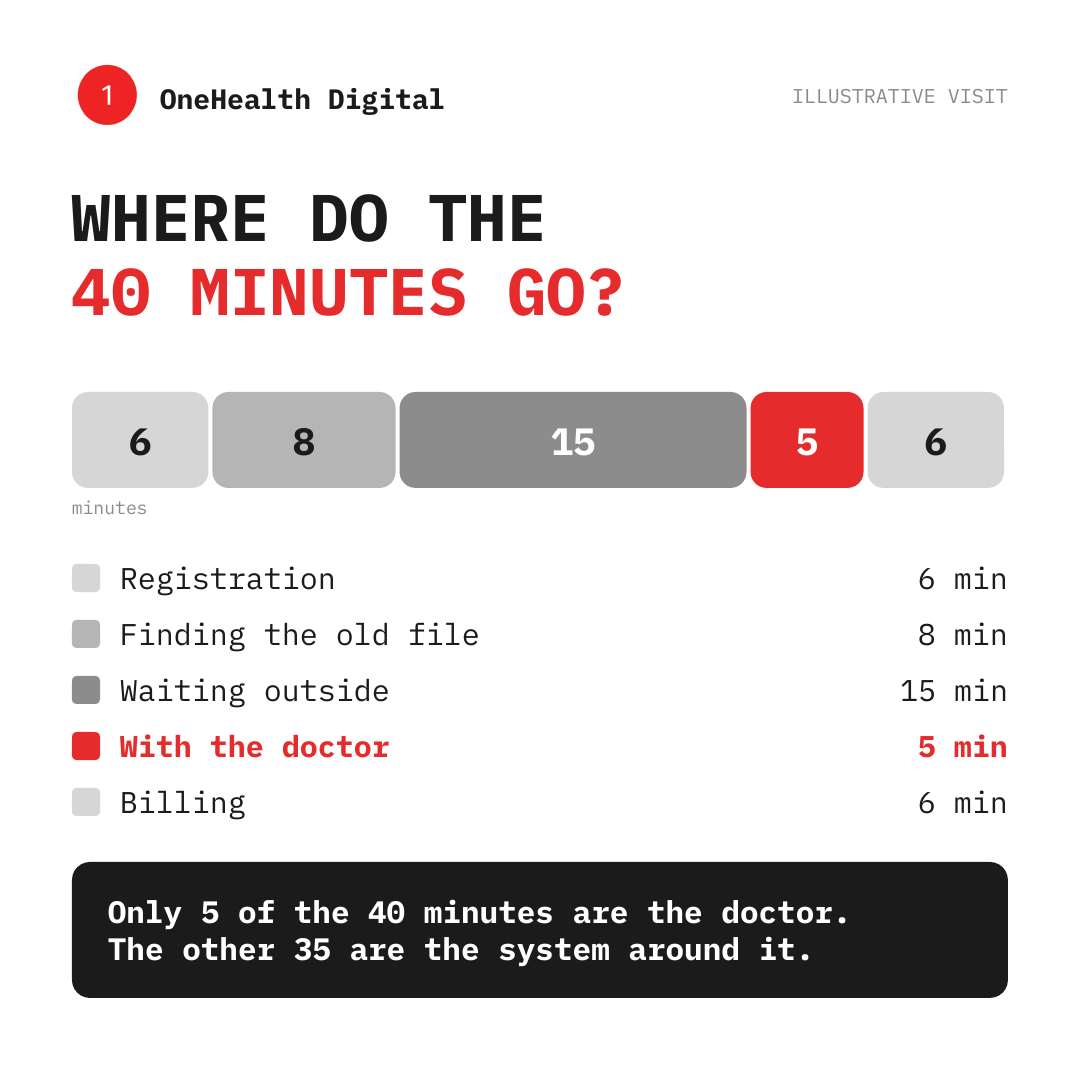
3. The average wait
From arrival to the start of the consultation, how long does a patient wait? Measure it on three ordinary days. The average matters, and so does the longest wait.
4. The report turnaround
From sample or scan to the doctor seeing the result, how long does it take? Delays here slow every decision downstream, and patients feel them as silence.
5. Records complete at the end of the visit
What share of patient records are complete when the patient leaves, rather than at the end of the week? A record finished later is a record that was unavailable when it mattered.
If a number is "we would have to check"
That is not a failure. It tells you where to start in January. Choose one number, give it one owner, and agree the date by which it will be known without a search.
Where a single system helps
When appointments, reminders, follow-ups and records sit in one system, most of these numbers can be read rather than assembled. OneHealth Digital connects patients, doctors, hospitals and healthcare workers on one platform, so the answer is a view rather than a project.
Which of the five would be hardest to answer in your organization today?