
The Exit Interview Your Patients Never Fill In: Retention Is an Operations Problem
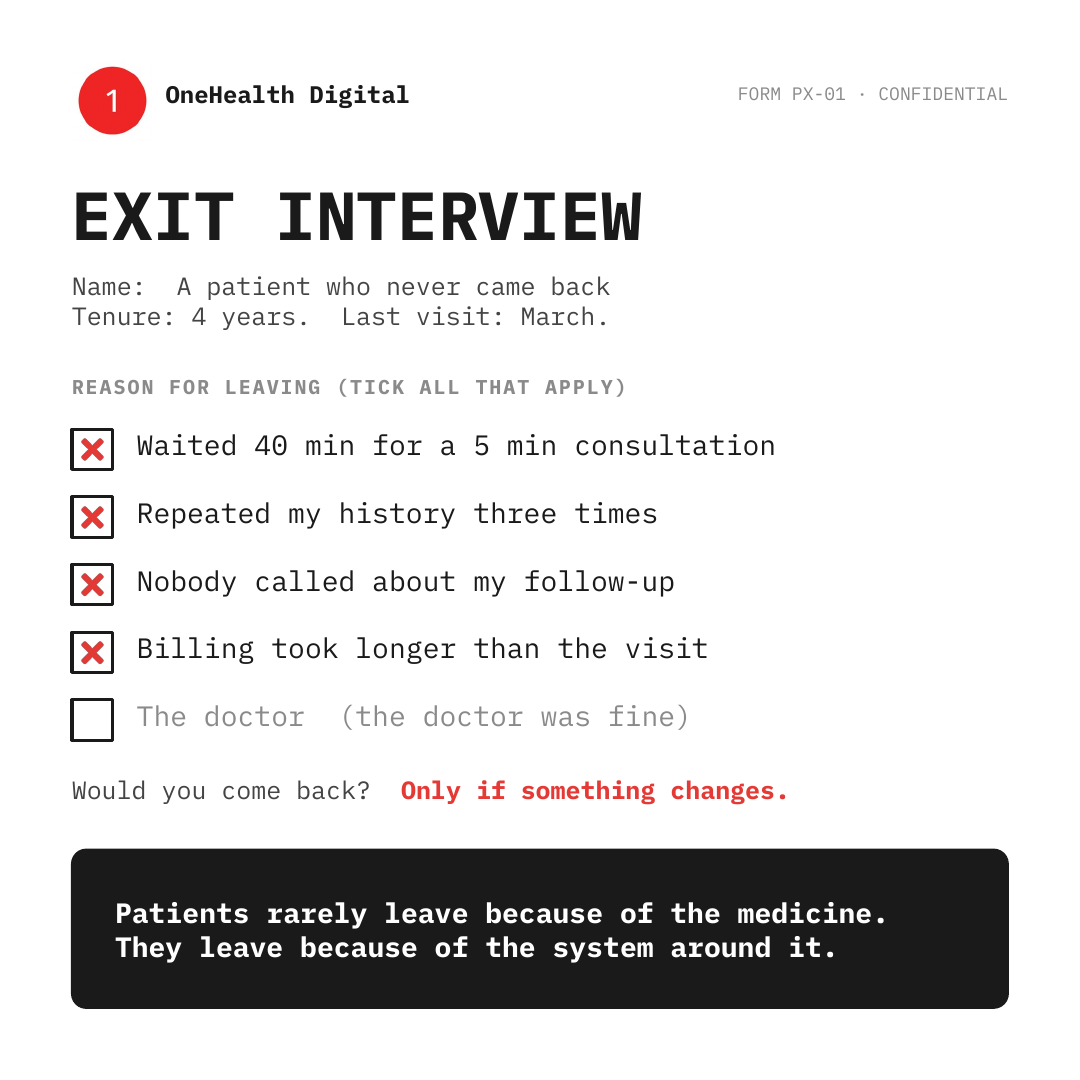
Hospitals and clinics hold exit interviews for staff. Almost none hold them for patients, because patients do not resign. They simply stop coming back.
If they did fill in a form, it might read like this. Waited 40 minutes for a 5-minute consultation. Repeated my history three times. Nobody called about my follow-up. Billing took longer than the visit. And the one box left unticked: the doctor. The doctor was fine.
That last line matters. Most patients do not leave because of the medicine. They leave because of the system around it.
Why this is an operations problem
For owners and administrators, this is good news. Clinical quality depends on many things outside an administrator's direct control. Operations do not. Waiting times, repeated paperwork and missed follow-ups are the product of processes and tools, and processes and tools can be changed.
The difficulty is that these losses are quiet. A patient who has a poor experience rarely complains. They book somewhere else next time. Nothing appears in a report, so nothing gets fixed.
Five things worth measuring
Waiting time against consultation time. Track the gap between arrival and being seen, alongside the length of the consultation. When the wait is many times longer than the visit, patients notice, even if they never say so.
How often a returning patient repeats their history. Ask your front desk and nursing staff how many times a returning patient is asked the same questions in one visit. Each repetition is a sign that information is not travelling between people or systems.
Follow-ups due versus follow-ups completed. Most hospitals know how many follow-ups were advised. Fewer know how many happened. The difference is one of the clearest early signals of patients drifting away.
Time to find a record. Ask the front desk to pull up a patient who last visited six months ago, with their last prescription and any pending follow-up. If it takes minutes rather than seconds, your team is losing time every day, and patients are waiting while they search.
Time at billing and discharge. The last impression of a visit is often the queue at the counter. A long wait at the end can undo a good consultation.
Small changes that add up
None of this requires a large project to start. A reminder sent the day before an appointment reduces no-shows. A follow-up list reviewed every morning catches patients before they drift. Asking staff where they spend time searching usually reveals the two or three bottlenecks that matter most.
The harder part is keeping it going, which is where scattered systems become the real obstacle. When appointments live in one tool, records in another and follow-ups on paper, every improvement depends on someone remembering to check all three.
Where OneHealth Digital fits
OneHealth Digital is built for hospital and clinic owners and administrators. It keeps patient records, appointment booking, reminders and follow-ups, and practice management in one secure platform, so staff see the full picture without switching between systems. Reminders and follow-up tracking run automatically, and administrators can see what is due, what is overdue and who has not come back.
The goal is simple: fewer patients with a reason to fill in that exit interview.
To see how it could work for your hospital or clinic, visit https://www.onehealthdigital.com.